 EN
EN RU
RU FR
FR AR
AR BG
BG HR
HR CS
CS DA
DA NL
NL FI
FI DE
DE EL
EL HI
HI IT
IT JA
JA KO
KO NO
NO PL
PL PT
PT RO
RO ES
ES SV
SV CA
CA TL
TL IW
IW ID
ID LV
LV LT
LT SR
SR SK
SK SL
SL UK
UK VI
VI SQ
SQ ET
ET GL
GL HU
HU MT
MT TH
TH TR
TR FA
FA AF
AF MS
MS SW
SW GA
GA CY
CY BE
BE IS
IS MK
MK YI
YI HY
HY AZ
AZ EU
EU KA
KA HT
HT UR
UR BN
BN BS
BS CEB
CEB EO
EO GU
GU HA
HA HMN
HMN IG
IG JW
JW KN
KN







As we all know, the flow of people in large shopping malls, supermarkets, and shopping malls is usually very large, so many people want to open children's playgrounds in these places where it is easy to attract customers. So, if you want to enter an indoor children's playground in a large shopping mall or supermarket, how should you negotiate? The first thing to note is that a typical negotiation will involve the following questions:
Rent, renovation period, rent-free period, rent-free period payment method, area measurement, swimming pool area, property, water, electricity, heating, air conditioning, contract period, rent increase, bet underpayment, entrance fee, exterior wall advertisement , Internal advertising space, middle-aged celebration, anniversary celebration, event promotion method, whether to sublease, whether to transfer, whether to change business content, whether the owner assists in handling industrial and commercial taxation and fire protection matters, whether to delay commercial compensation, etc.
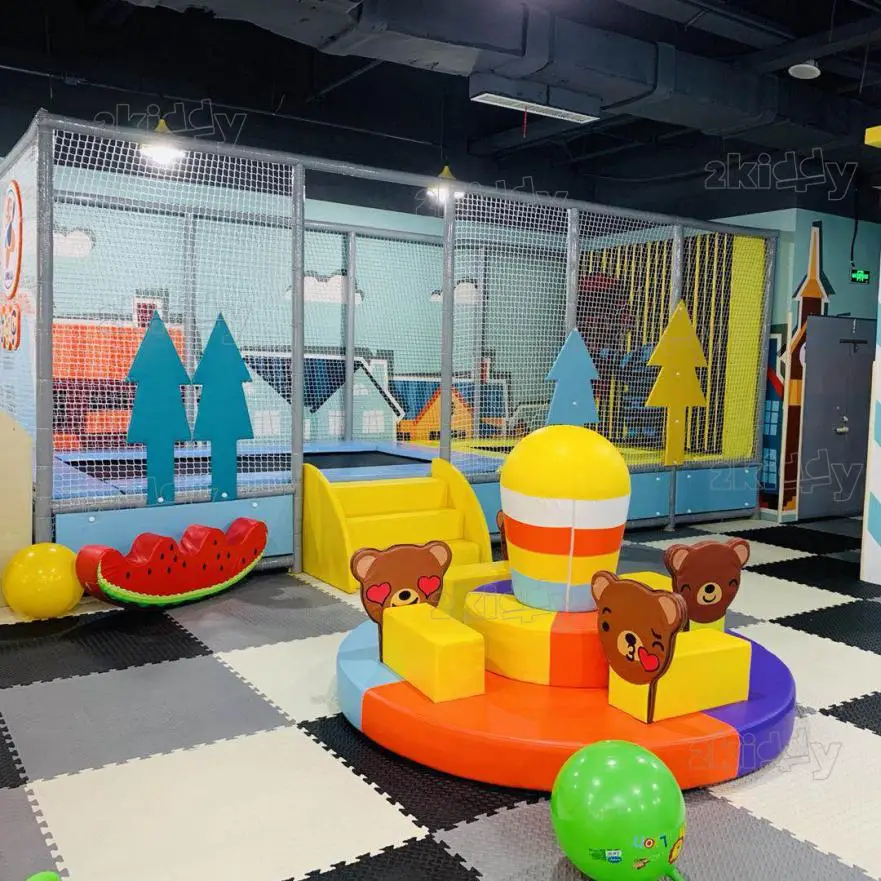
In addition, before the negotiation, you must clearly ask for the benefits that your own park brings to the development of the mall: children's theme parks can drive a large number of customers and the popularity of shopping malls, and can often organize psychological activities for student groups, which can create a crowded atmosphere for shopping malls, and even drive consumers in the mall. Consumption in the mall.
Be a good detective and be well prepared before negotiating.
1. Understand the rental price of the supermarket in detail, and determine the negotiation and maximum price of the psychological price.
2. Correctly evaluate the status and influence of children's playgrounds in supermarkets, and estimate monthly sales.
3. If possible, understand the negotiator's situation: including our personal development background, hobbies, work and study tasks, current colleagues' evaluation of him, etc. This data information may be used at some point.
4. Learn to gather information and read others.
Negotiation is also a game of debate, and you should know how to take the initiative.

Good at making full use of off-court relationships. For the shopping malls we are dealing with for the first time, we must be good at discovering and using off-site relationships, and invite "important historical figures" to negotiate outside the site by analyzing various information channels. "It will get twice the result with half the effort, and it will be easier to achieve success."
Know yourself and the enemy, and you will never be imperiled in a hundred battles. Often, the more formal a large shopping mall is, the more it cares about the qualifications and brands of new owners entering the mall. For general students, they are willing to introduce brands with mature technology, because a shopping mall will not provide healthy growth time for their own brand development. If you don't have this, the negotiation process can be deadlocked. On the one hand, the strength of new brands is limited, and they are unable to pay more fees to the mall in advance; on the other hand, the mall's requirement for such owners is to set an upper limit on the entry fee, and will not easily lower the threshold. At this time, it is necessary to know ourselves and the enemy, understand factors such as the social, economic and living environment, business circles, and consumption structure characteristics of different regions, and make commitments to the shopping malls in terms of learning some popularity, promotion management activities, etc., so as to continuously increase the weight of the company's negotiations.

Beg for others, be courteous to others. When negotiating with supermarkets, most of these situations require us to be in a socially disadvantaged position, that is, they have something to ask for. Of course, you should make appropriate concessions when you ask for others, but you should learn a little bit about how to give. When negotiating, you can make a little concession on learning some issues, so that the other party can feel your sincerity, and tactfully try to pass your own interests on other issues, because you have already made certain concessions on issues before the design, generally It will no longer be embarrassing to analyze the other party's business using the situation. This is called fighting big with small things, taking the initiative to attack, and highlighting one's own principles with small profits.
Be flexible and respond promptly to break the deadlock in negotiations. Negotiations sometimes come to a deadlock because of the insistence of both parties. At this time, we should learn to stop in a timely manner and rearrange the working time of the next negotiation. For both parties in the deadlocked negotiation process, this period of learning is very important and valuable. We should think more about some management methods so that the subsequent negotiations can be completed smoothly.
Table of Contents

Our 2kiddy is comprehensive amusement project manufacturer, which have one-stop service of design-sale-shipping-installation guidance, we offering a wide variety of indoor&outdoor playground, trampoline park, rope course, plastic slides, fitness equipment, soft play etc.